Patent strategy used to begin with one assumption: the U.S. was the main event. That assumption is now incomplete. The U.S. still matters enormously, particularly when the objective is monetary damages, but the first real pressure point in a global dispute increasingly arrives from somewhere else, whether that's a European injunction threat, a UK FRAND rate, a Chinese anti-suit fight, an ITC exclusion order, an EPO validity challenge, or a fast preliminary injunction in a national European court.
The shift here is easy to misread. Enforcement is not "leaving" the United States so much as becoming a routing problem. The question used to be whether you held valid, infringed claims. Now it also includes a second question that often matters more: which forum creates leverage first?
The global data explains why that second question has teeth. WIPO recorded a record 3.7 million patent applications worldwide in 2024, up 4.9% from the year before, and China's patent office alone took in 1.8 million of them, more than three times the USPTO's 603,194. Asian patent offices now receive roughly 70% of all applications filed globally. At the same time, corporate value has gone almost entirely intangible: Ocean Tomo's 2025 study puts intangible assets at about 92% of S&P 500 market capitalization by the end of 2025, up from 17% in 1975. Put those two trends side by side and the tension is obvious. More enterprise value than ever rides on IP, even as the system for enforcing that value grows less centralized.
A specialized forum, not a fading one
It would be a mistake to read any of this as American decline. The U.S. didn't become irrelevant; it became specialized, and it specialized in the thing that often matters most. It remains the world's most important damages forum, and that is no small advantage. Lex Machina reported that U.S. patent filings rose 22% in 2024 and that patent damages reached $4.3 billion that year, the highest total in its ten-year dataset.
Cornerstone's report reaches the same conclusion from a different direction. Between 2019 and 2024, product companies accounted for $5.49 billion in aggregate patent damages, ahead of NPEs at $3.99 billion and PAEs at $2.06 billion, and the largest average awards from 2019 to 2025 landed in informatics and telecommunications, at $99.4 million and $92.7 million respectively. This is the U.S. system at its strongest: large markets, large awards, sophisticated courts, discovery, juries, and high-stakes disputes in software, communications, semiconductors, and life sciences.
What the U.S. is no longer is an all-purpose enforcement engine, and two structural changes explain much of why. The Supreme Court's eBay decision ended automatic injunctive relief and replaced it with a four-factor equitable test, which Cornerstone notes has made injunctions less common, especially for NPEs, and pushed U.S. litigation toward money as the primary remedy. PTAB review then added a parallel validity track that reshapes timing, settlement posture, and the order in which forums get used. The practical consequence is that the winning move in many disputes is not the largest final judgment but the earliest credible constraint on the other side's business.
Choosing a remedy stack, not a courthouse
Once timing and leverage drive the strategy, the decision a patent owner faces is less about picking a courthouse and more about assembling a remedy stack.
U.S. district courts supply damages. The ITC supplies exclusionary pressure, often on a 15-to-18-month timeline, and is especially potent in disputes over imported electronics, semiconductors, and consumer devices; Cornerstone frames it as a strategic complement to district court litigation because it delivers quasi-injunctive relief inside the U.S. system. The UPC offers something different again, consolidating multi-country European enforcement into a single forum with pan-European injunction potential and expected 12-to-18-month timelines. By the end of 2025 it had logged 669 cumulative core actions, including 492 infringement actions.
National European courts still carry weight alongside the UPC. Germany matters because injunctions remain the default remedy in most cases despite proportionality reforms, and although German national filings dipped after the UPC launched, they rebounded in 2025 even as roughly 70% of UPC proceedings concentrated in Germany's five UPC divisions. The Netherlands is favored for rapid preliminary injunctions and tactical flexibility. The UK plays a role that has little to do with injunction speed and everything to do with price: its courts have claimed authority to set global FRAND terms in SEP disputes, a thread running through Unwired Planet, InterDigital, Conversant, and Optis. China rounds out the picture with scale, speed, market access, specialized IP institutions, a developing anti-suit injunction practice, and a growing willingness to shape global SEP licensing, to the point that Cornerstone notes Chinese courts may set global FRAND terms and that Chinese proceedings now interact directly with disputes in Europe and the U.S.
Seen together, the map has a clear logic. Damages can be largest in the U.S. Injunction leverage can arrive faster in Europe. A global SEP price may be set in the UK. Market access and cross-border coordination can be decided in China. Importation becomes the pressure point at the ITC. Brazil, India, and Colombia sit further out, no longer central but no longer irrelevant either; Cornerstone describes Brazil as a market-specific venue with growing preliminary injunction activity, India as an emerging forum for SEP and pharmaceutical litigation, and Colombia as a tactical SEP venue inside coordinated campaigns. Each can matter when the product market, regulatory overlay, or licensing fight makes local relief strategically useful.
Enforcement is scaling in two directions at once
Most commentary stops at globalization, which misses a second structural change: IP enforcement is scaling both upward and outward.
At the top end, disputes are concentrating around foundational technologies, and the data bears this out. From 2019 to 2025, the top U.S. utility-patent industries were telecommunications, informatics, healthcare and medical technology, instrumentation and metrology, and biomolecular compounds, the technical core of computing, connectivity, AI infrastructure, and modern medicine. At the lower end, enforcement is industrializing. Schedule A litigation, which names large numbers of online sellers in a single complaint, grew from negligible levels before 2020 to roughly 9% of filings by 2025.
That bifurcation has real operational consequences. The same company may need one playbook for a billion-dollar SEP fight and another for counterfeit or platform-based infringement. Both are IP enforcement, but they demand different systems, evidence, economics, and case management. The older model treated patent litigation as a bespoke legal event; the emerging one treats enforcement as an operating layer that runs across products, jurisdictions, marketplaces, and counterparties.
Trade secrets absorb what patents handle poorly
Cornerstone also documents a domestic substitution effect. When patent enforcement is slow, disclosure-heavy, or uncertain, companies lean harder on trade secrets, and that is especially true for AI systems, datasets, model weights, manufacturing methods, semiconductor processes, and software infrastructure, where secrecy may protect the asset better than public disclosure would.
This is not an anti-patent trend so much as a portfolio-design one. Patents protect what can be disclosed, claimed, detected, and enforced; trade secrets protect what is hard to reverse engineer, changes quickly, depends on internal data or process, or simply loses value the moment it's published. AI blurs that boundary, because a single product can fold together patentable systems, copyrighted code, proprietary training data, protected model weights, confidential deployment architecture, trademarks, licensing obligations, and regulatory disclosures all at once. As Cornerstone puts it, AI cuts across patent, copyright, trade secret, and trademark law simultaneously, which means the patent question can no longer be separated cleanly from the broader IP question.
The route is the strategic unit
For a serious technology company, portfolio value now turns on a set of operational questions rather than a single legal one. Which claims support damages in the U.S.? Which support injunction leverage in Europe? Which assets should never be patented because secrecy is stronger? Which products create ITC exposure because they cross a border? Which patents carry PTAB, EPO opposition, or UPC revocation risk? Which jurisdictions matter for market access rather than damages, which standards-related assets could trigger global FRAND litigation, and which deadlines, stays, and parallel proceedings change the order of moves?
Answering those questions is closer to systems design than to traditional legal research. A global portfolio has become a live network of claims, products, jurisdictions, remedies, deadlines, counterparties, standards, licenses, and business objectives, and any team still managing that network with static documents and institutional memory is working with the wrong abstraction. This is where AI actually belongs in patent litigation, not as a tool that drafts a brief but as infrastructure for modeling the litigation system itself. The hard problem was never producing more text; it's maintaining a current picture of where leverage sits, how it shifts, and what each forum does to the economics of a dispute. That is the work we built &AI to do.
None of this is a decline story, and the distinction matters, because a decline story invites nostalgia while a specialization story points toward better strategy. The U.S. remains the damages anchor. Europe is becoming the injunction layer. The UK sets global rates. China governs market access and coordination. The ITC supplies domestic exclusion. Trade secrets hold what patents shouldn't disclose, and AI raises the volume, speed, and complexity of the whole system. The center of patent strategy is no longer a country. It's the routing layer that connects the asset to the remedy.
If the route is the strategic unit, the tooling has to speak the whole route. That's what we built &AI for: working across the major patent offices, including the USPTO, EPO, JPO, CNIPA, and more, handling filings, office actions, and prior art in their original languages, and keeping deadlines, family members, and parallel proceedings connected in one live model instead of scattered across local counsel and spreadsheets. The point isn't to replace jurisdictional expertise; it's to give the people who have it a current map of where leverage sits. Book a demo to see how &AI works across global patent offices.
Frequently asked questions
Is the U.S. still important for patent enforcement?
Yes. The U.S. remains central for monetary damages, especially in high-value technology and life sciences disputes. What it isn't anymore is sufficient on its own, because injunctions, FRAND rates, validity challenges, and exclusionary relief may all arrive from other forums first.
What does it mean that patent enforcement is becoming a routing problem?
Companies now choose forums based on the remedy they need, the speed they can get it, the market leverage it creates, the validity risk involved, and the underlying business objective. A single dispute can span U.S. damages litigation, PTAB review, ITC exclusion proceedings, UPC enforcement, EPO opposition, UK FRAND litigation, and parallel actions in China.
Why does the UPC matter for patent litigation?
The Unified Patent Court gives patent owners one centralized European forum capable of pan-European injunctions, with expected 12-to-18-month timelines, which makes it an increasingly important venue in coordinated global disputes.
Why are trade secrets becoming more important?
Some assets simply aren't suited to patent disclosure, including AI systems, datasets, model weights, semiconductor manufacturing methods, algorithms, and fast-changing software infrastructure. Trade secrets aren't replacing patents wholesale; they're absorbing the categories where secrecy offers stronger protection than a published claim would.
Why does AI make patent strategy more complex?
A single AI product can combine patents, copyrights, trade secrets, trademarks, data rights, model weights, infrastructure, and licensing obligations, so the strategy becomes less about choosing one form of protection and more about coordinating several across multiple jurisdictions.
What's the practical takeaway for companies?
Treat the portfolio as a global enforcement system. Know where each asset creates leverage, which forum can move first, which remedy matters most, and which technologies are better patented than kept secret.
How does &AI support multi-jurisdiction patent work?
&AI is built to operate across the major patent offices and languages, so a portfolio can be managed as one connected system rather than a set of disconnected local matters. It handles documents in their original language, tracks deadlines and family relationships across jurisdictions, and surfaces where each asset creates leverage, the routing view this article describes.
Related insights
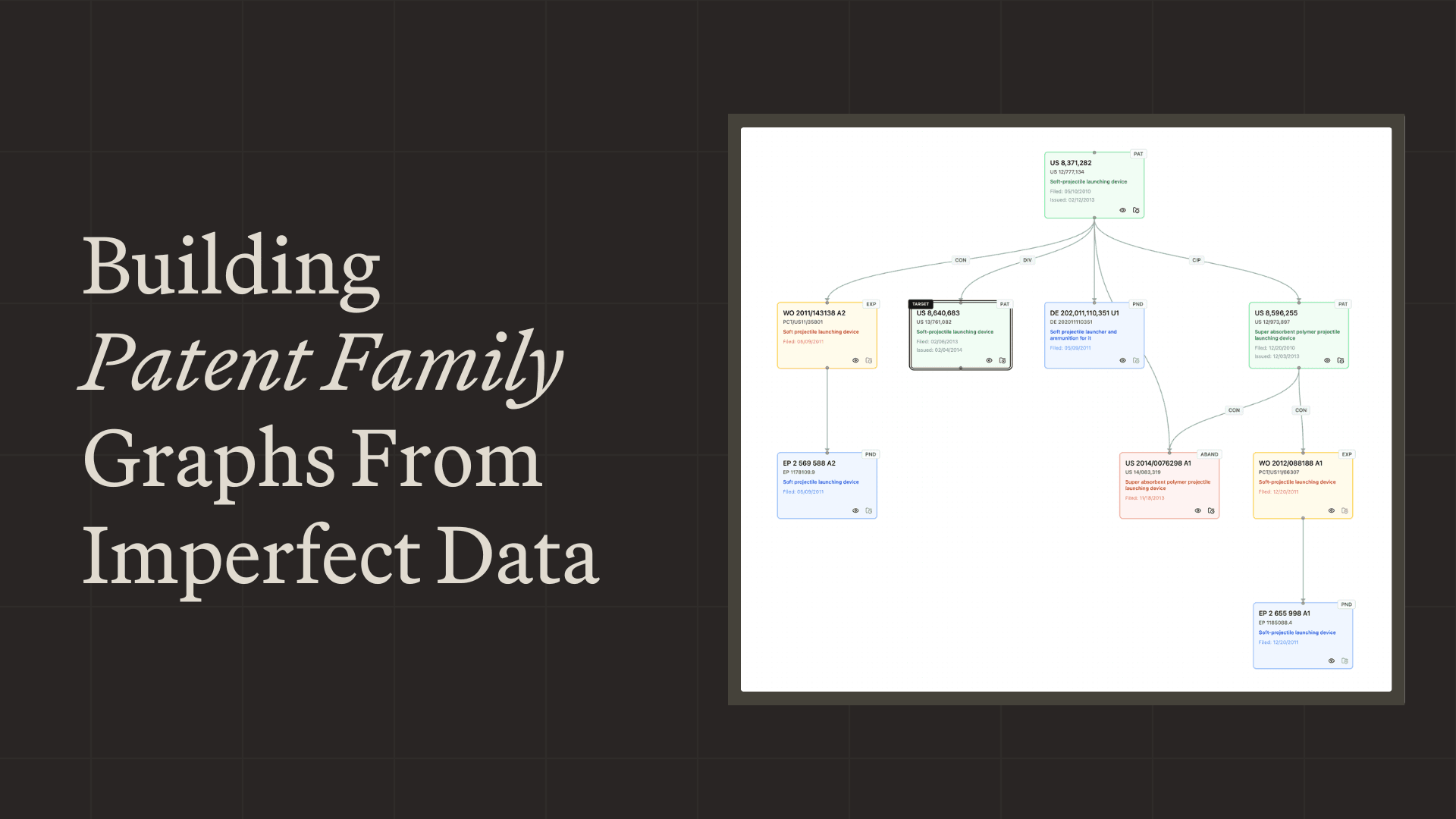
Building Patent Family Graphs From Imperfect Data
How we built &AI's patent family visualization, which pulls from multiple data sources to build the complete graph from a single application number.
February 19, 2026
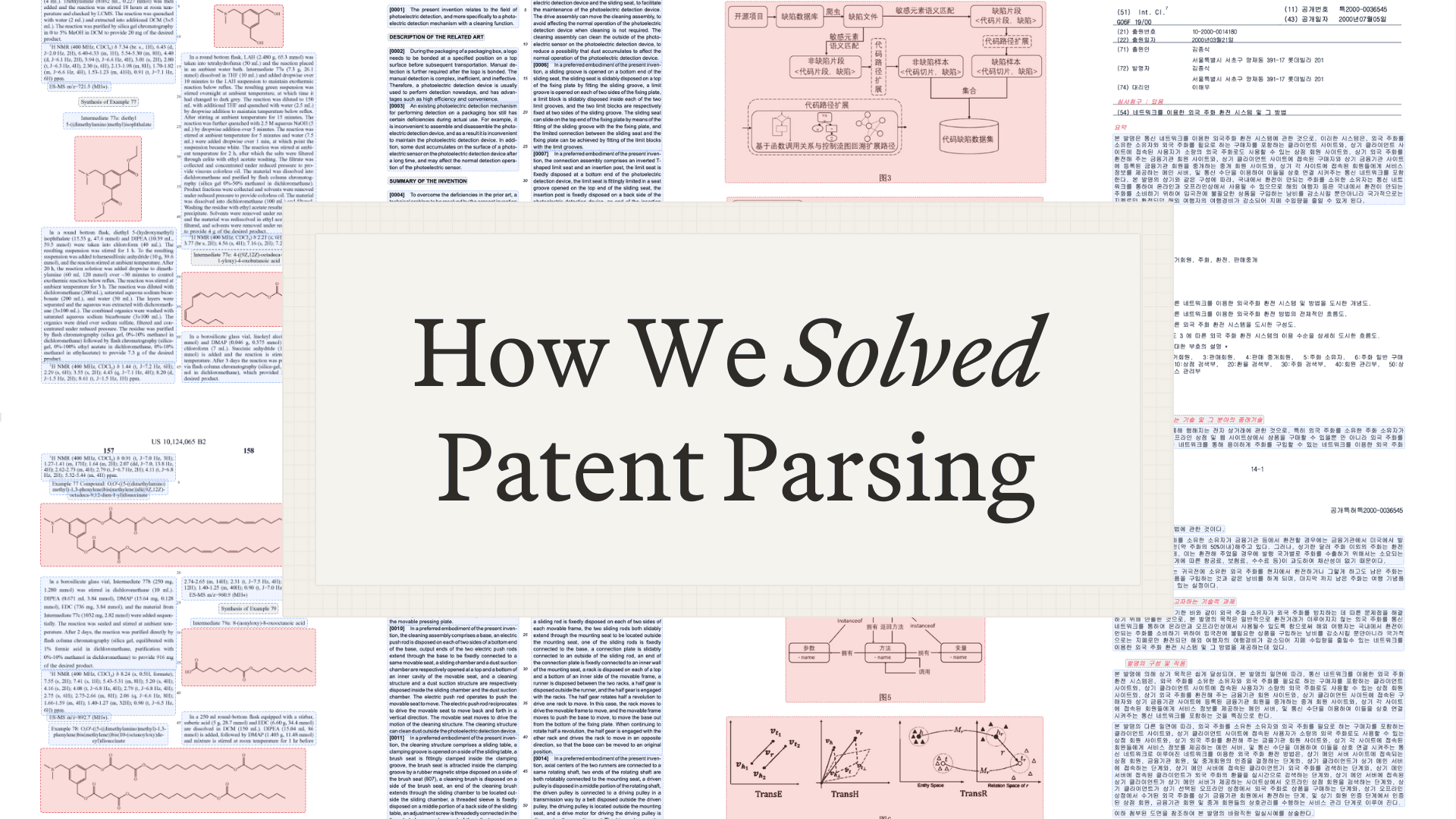
How &AI Solved Patent Parsing
Inside the parsing infrastructure that powers litigation-grade patent analysis at &AI.
February 4, 2026

Scale your
patent expertise
&AI is a platform for patent litigators to craft trial-ready work product—fast enough for pitches, strong enough for court.